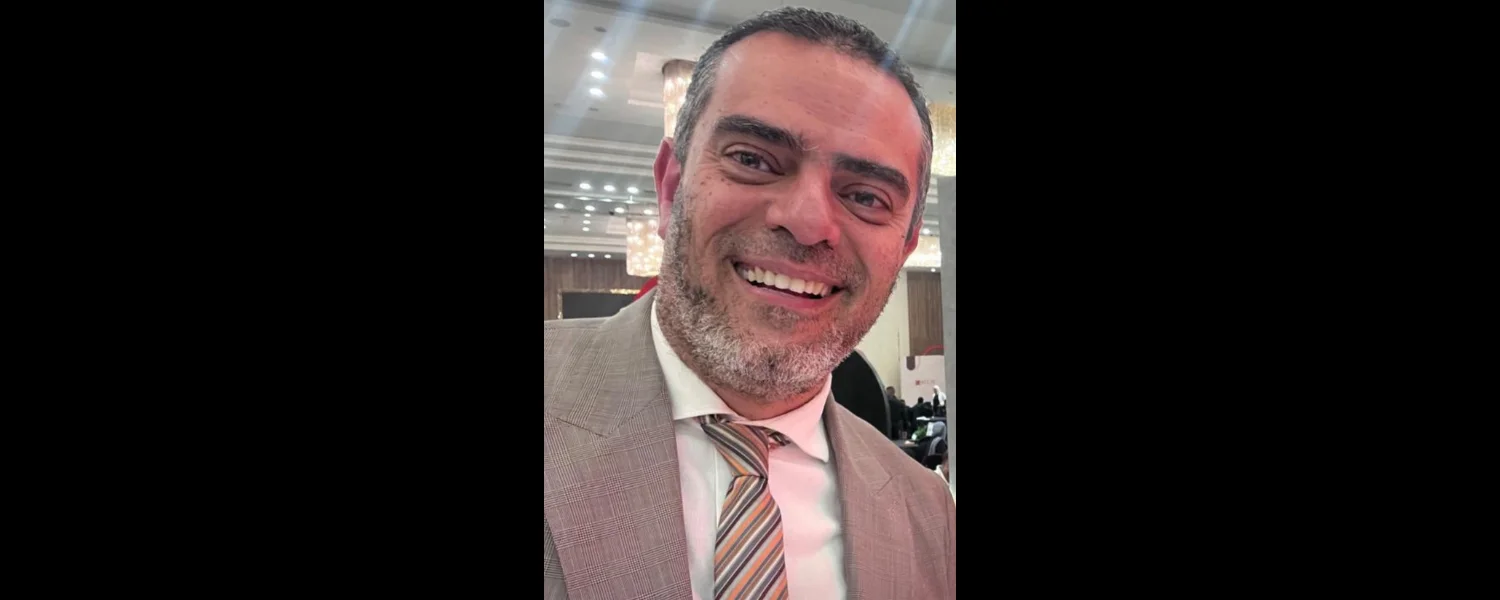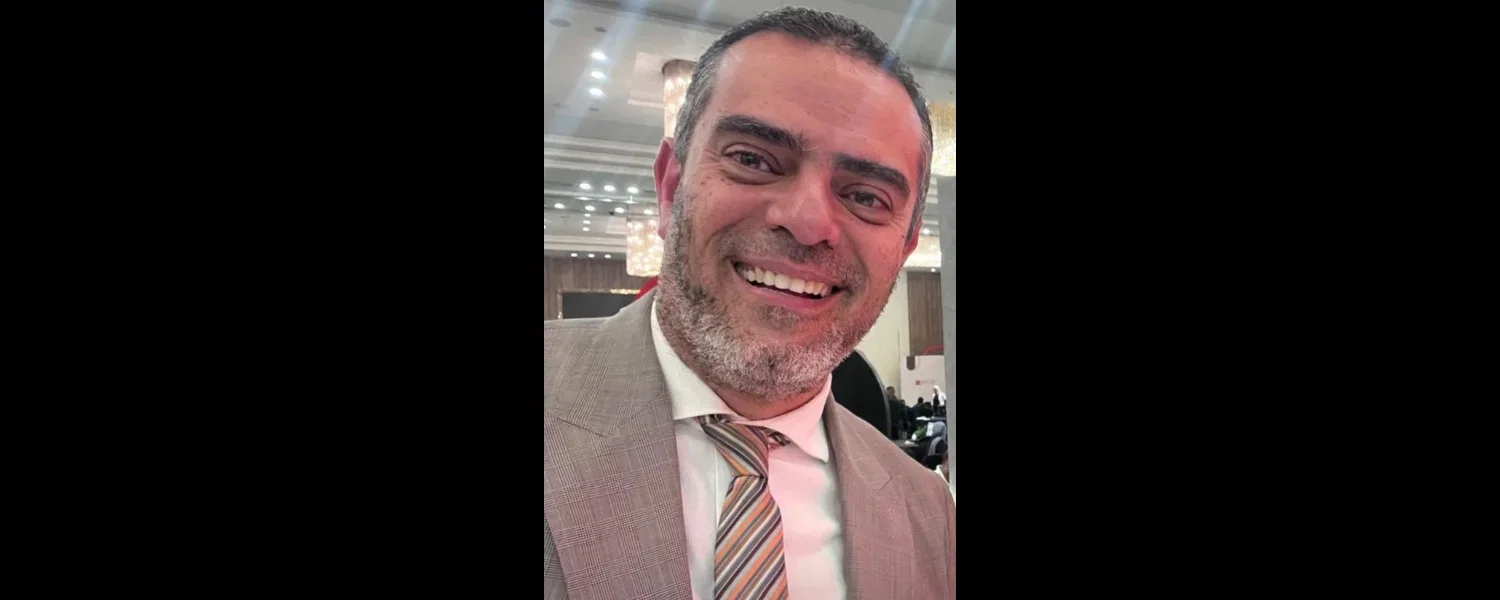
Mohamed Nazmy, Vice President at Keller Williams Egypt, on RED’s partnership with the global brand and the future of the brokerage market
Not every real estate company expanding into a market like Egypt has years of preparation behind it. Mohamed Nazmy, Vice President at Keller Williams Egypt, told Proplix, in a candid conversation, how the global brand’s entry into the Egyptian market — through RED’s exclusive partnership — wasn’t a one-off deal, but a step they’d been planning for a long time. He also walked us through Cityscape’s postponement, the state’s decisions on defaulting developers, and his outlook on areas like the New Administrative Capital on Egypt’s real estate investment map.
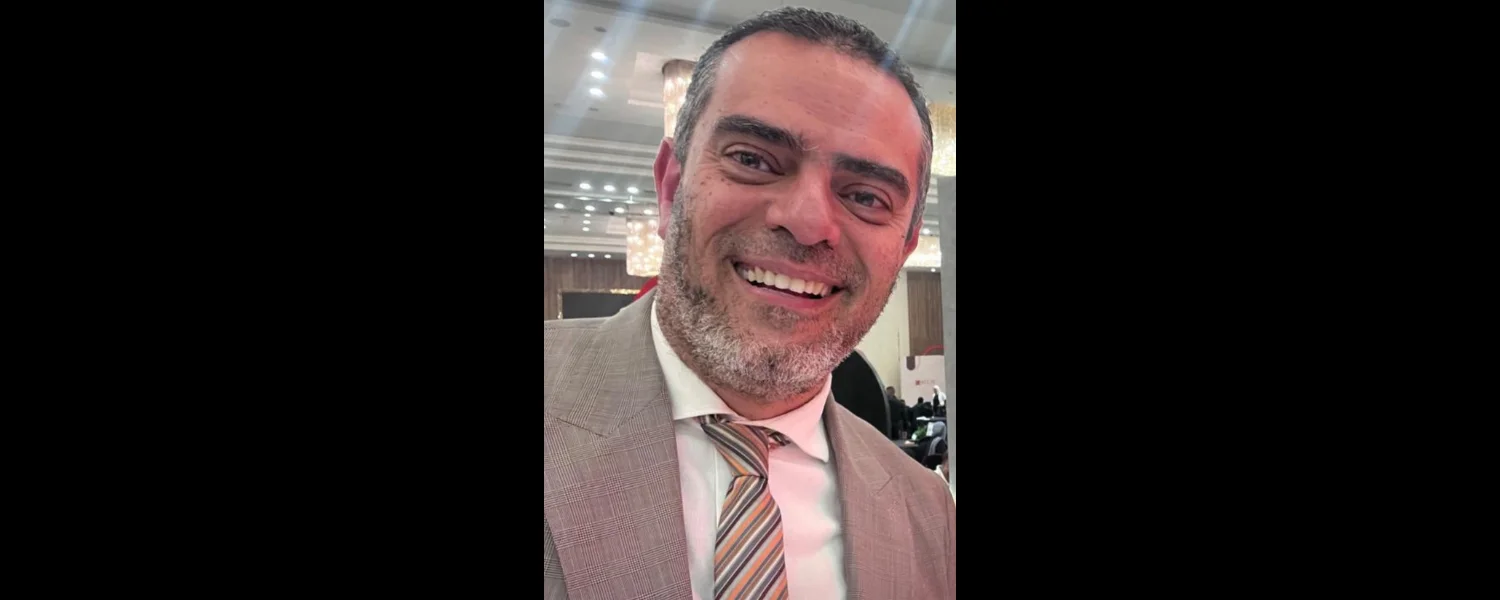
RED After Keller Williams: A Step They’d Been Waiting For
We asked him how he sees the step of Keller Williams entering the market after everything that’s happened with RED, and how it’s built on RED:
“We’ve been in the market for a very long time, and thank God we’ve taken quite a few steps, and God has blessed us with success. I see Keller Williams as an addition to RED, and an addition to the market in general. God willing, we’ll help everyone working in brokerage. It’s a really strong step we’d been waiting for and planning for over a very long period, and thank God we took it from the start of this year. God willing, it’ll create a leap forward for brokerage in Egypt.”
The partnership with Keller Williams — the world’s largest real estate brokerage network by agent count — wasn’t a sudden decision for them. It’s the culmination of a long preparation plan.
Cityscape’s Postponement: Not a Cancellation
We asked him about this year, and about Cityscape being cancelled for the first time since it started in Egypt, and what the reasons are from his point of view:
“There’s no scheme, nothing like that, it’s normal. Some people are repositioning themselves in the market. So something like that happening is normal — it’s not something I find strange, I even see it as a step forward. And then, the phrase ‘Cityscape got cancelled’ — that’s not accurate. Cityscape got postponed to next year, so that when it comes back, it’ll be much stronger. Thank God we exhibited last year, and we exhibit every year. God willing, Cityscape, RED, and Keller Williams will all be there.”
He made clear that no major developer has pulled out of the market — this is just a single season being postponed, and his proof is that RED itself keeps running its own annual exhibition, RED Expo, on a regular basis.
The State’s Decisions on Defaulting Developers
We asked him about the decisions the state has been taking toward defaulting developers, including reclaiming land from some of them, and whether this will affect Egypt’s real estate market:
“Of course this will have a positive effect. Look, in a country like this, whoever doesn’t have someone big backing them needs someone big to buy for them. And of course God is above everyone. The fact that leadership is paying this much attention to the real estate sector — that’s something beautiful, very reassuring, and it simplifies things a lot. Because every field has the good and the bad, the straightforward and the shady. So now, a developer who’s developing and taking land knows and sees for himself that if he’s late, he has a real problem with the state. If he doesn’t deliver the required quality, he won’t get more land. And if it turns out he acquired land and didn’t build on it, it’ll be taken back from him. This will positively affect everyone currently in the market, and everyone planning to acquire land going forward. They’ll know the matter isn’t left unchecked — it’s monitored by the state. And to me, that’s something that simplifies things, that there’s a strong deterrent for anyone who breaks the rules, whether on deadlines or anything else.”
This oversight, in his view, isn’t a burden on the market — it’s an extra layer of protection for the buyer, and it’s the same logic that comes up in real estate buying tips in Egypt: a developer’s track record on delivery matters more than any marketing pitch.
Delayed Commissions and the Cash Flow Problem
We asked him about developers delaying commission payments to brokerage companies, causing a cash flow crisis for some of them, and whether this is something that could keep happening:
“Honestly, let me tell you something. Major development companies shouldn’t do that, especially not with the big brokerage firms. Thank God, here at RED and Keller Williams, developers come to us, and thank God they’re committed to the deadlines they agree on, whether it’s the figure they quote or the timing they quote. And beyond that, as a brokerage company, you have a choice. For example, I work with around 300 to 400 projects across Egypt, from New Cairo to Future City to the New Administrative Capital to Sheikh Zayed to Ain Sokhna to the North Coast and the Red Sea. So if I find someone delaying my commission once, twice, three times, I stop working with them, because it hurts me in my own collection cycle.”
Not every broker has the luxury of that choice, but RED’s scale — covering 300 to 400 projects at once — is what puts that leverage in his hands.
What’s Next for Keller Williams: Scale and Technology
We asked him whether there are still steps Keller Williams Egypt needs to take to grow further, and what those might look like:
“We’re still just getting started with Keller Williams. Thank God we now have around 30 franchises, backed by roughly 1,000 agents, and we’re taking very strong steps — there’ll be some big surprises for the partners joining us. Keller Williams is a multinational brand: we’re in 68 countries, we have 200,000 employees, and we’re number one in the world, and in Egypt there are only 3 or 4 companies that even give out a global franchise like this. And what we give isn’t just the brand — we have a strong acquisition team that brings you exactly who you need every month, and we have RED Academy, which has had an incredibly successful run, and on top of that we added the worldwide KW Academy — number one in the world across many fields — which we ran for free in Sheikh Zayed and New Cairo. And most importantly: we’re number one in the world in AI and tech. I have a system called Command, and that’s the magic lantern that lets all 200,000 of us see each other — so when I list a unit, everyone can see it. Egypt is a huge country with natural advantages, and there are still surprises coming, like our new Singapore, the New Administrative Capital, at around 170,000 feddans, which is already a done deal. The result is referrals coming from every corner of the world, inside Egypt or even abroad, which used to be hard before.”
The number that comes up most in what he says isn’t a project number or a price — it’s a network number: 200,000 people who can see each other. And that, to them, is what separates a local brokerage from a global brand that opens the door to referrals in both directions.
His Message to Young People Entering Real Estate
We asked him what message he’d like to give to young people who want to get into real estate in Egypt right now:
“Look, to the wonderful young people out there, my message is: in this job, you’re not an employee. If you don’t love it, and from there on you’re just putting in your mind, your time, and your effort, you’ll stay average. This job — you’ll love it, and it’ll love you back. So my advice to anyone in this field: first, learn well, and study your product well. Whether you’re at a developer or a brokerage, study all the projects thoroughly, know how to make comparisons, and be ready. Because back when I started in this field in 2008, unlike now in 2026, that’s 20 years. Back then, the number of brokerage companies was very small, so when someone called you, they didn’t have more than a handful of people to deal with. Now we’re in the thousands. There are 4 or 5 thousand companies, and if each company has 10 agents, that’s 40,000 agents who could be calling that same person before you do. So if that person doesn’t sense from the phone call that you’re sharp, knowledgeable, well-studied, that you won’t mislead them and you’ll give them accurate information, and they don’t feel real trust from you, they’ll go find someone else. So my advice to anyone entering the field: be sharp, be knowledgeable, study hard, and love the job so the job loves you back.”
His advice isn’t really about sales technique — it’s about how much the competition has changed over 20 years, from a handful of brokers to thousands. The competitive edge has shifted to knowledge, not just personal relationships.
Egypt’s Best Investment Areas
The last question was about which area he sees as having the highest investment potential in Egypt — the coast, New Cairo, or Zayed:
“Look, Egypt — I’m not just hyping it up or anything like that, but everything really is beautiful in Egypt, genuinely. During season 6, 7, and 8, I feel like the coast — what’s happening there? Units are renting for 15 to 20 thousand pounds a day. People tell you it used to sell for 600 or 700 thousand pounds, and now it rents for 15 thousand a day. No, the North Coast is incredible. Then the season ends, and people tell you the coast is the worst thing in the world. Then you find that places in Ain Sokhna, especially with the Galala development, now have employees living there year-round. So you say, no, Sokhna is better — it’s not just two months a year, we live it all year. Then a bit later, you see, God willing, when the Capital opens, this massive landmark, everyone’s excited about it. Something huge. Then people tell you, look at hospitality real estate, it’s number one right now. And it’s in a spot that wasn’t even the best location — near the Pyramids, not Sheikh Zayed or New Cairo — and they tell you it’s the best spot. You see? Everything really is good. Sheikh Zayed is nice, New Cairo is amazing, a somewhat longer-term investment, the Capital has no equal, Sokhna works all year, and the coast, after El Alamein, will also have year-round rentals. So you’re talking about something amazing. There’s no country like this, no beauty like this, no sea as magical as this anywhere in the world. Everyone comes here, sees places like Marassi, Almaza Bay, Ghazala Bay, Rixos. People come from Spain and Barcelona, the world’s number one tourism destination, and they come here and they’re amazed. You see foreigners — I used to be surprised by the sight myself, seeing a tourist throw themselves under the sun from 10 in the morning. They have breakfast at 8am, hit the beach at 10, and sit there under the sun from 10 to 5. I understood it when I travelled abroad and couldn’t find any sun. If you go to England, if you go to Germany, there’s no sun. If you go to Norway, it’s a really gloomy country. Norway, Sweden, Finland, Denmark — those four countries have no sun. So I understood that when someone comes here and sees this, they can’t believe it. Honestly, our country has real wealth. God protect our country forever.”
He doesn’t give one single answer to “the best area,” because every area, in his view, wins in its own season: the coast in summer, Sokhna all year round, and the New Capital over the long term. The real decision isn’t about picking one area — it’s about understanding the timing of each market.